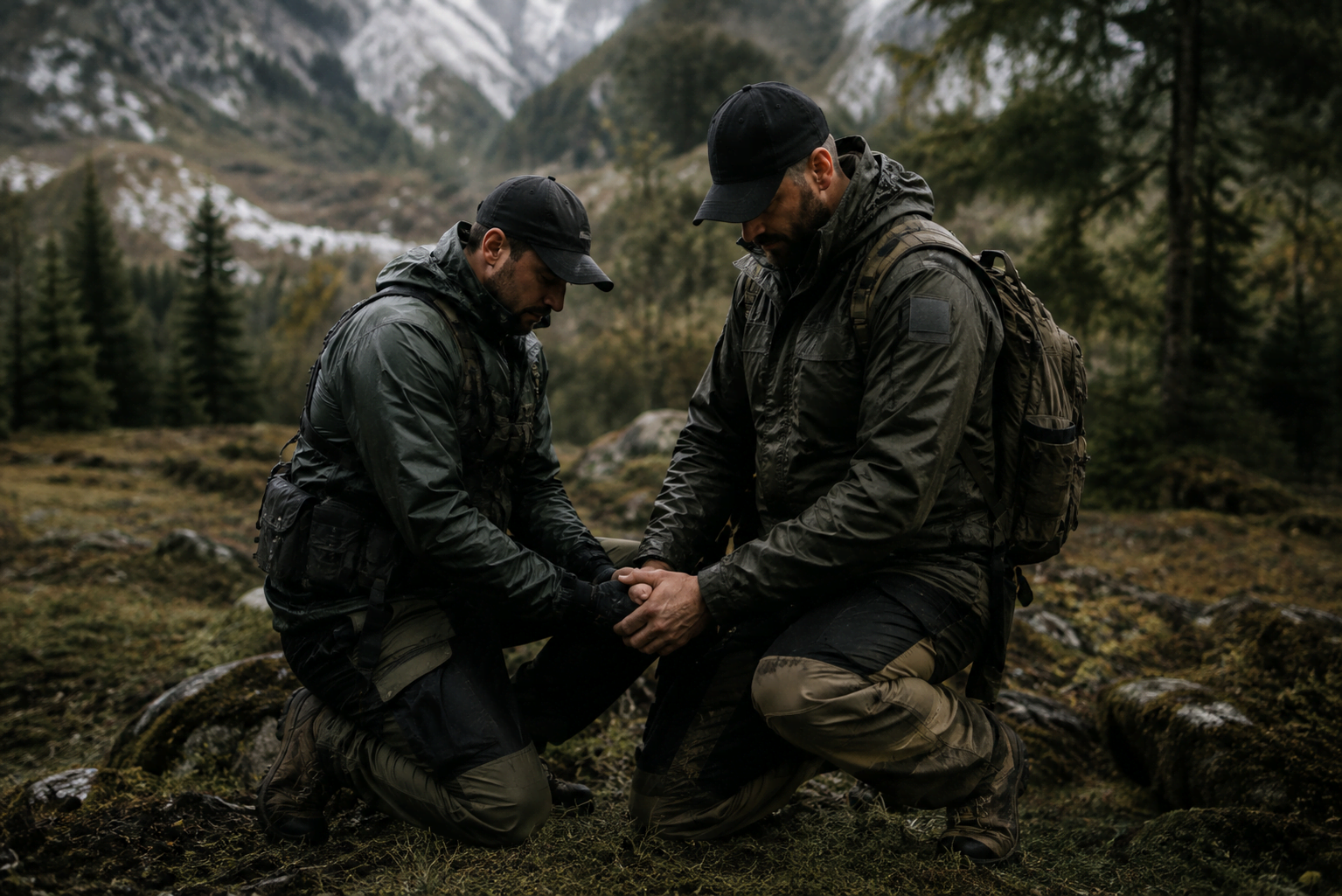
The must-haves for the wild.
Bushcraft is about more than simply spending time outdoors. It’s about developing practical skills, understanding your surroundings, and using your equipment effectively.
Whether you’re building a shelter, preparing food, navigating through the woods, or spending a night outdoors, having the right gear can make the experience safer, easier, and more enjoyable.
You don’t need to carry everything. The key is choosing reliable, versatile equipment that serves a purpose.
1. Start With a Reliable Pack
Your pack is the foundation of your bushcraft setup.
It needs to carry your essential equipment while remaining comfortable enough for extended movement through uneven terrain.
Look for a pack that offers:
- Durable construction
- Comfortable shoulder straps
- Practical compartments
- Secure closures
- Enough capacity for your intended trip
A military surplus pack can be an excellent choice when durability and practical design are priorities.
2. Carry a Good Cutting Tool
A dependable cutting tool is one of the most useful pieces of bushcraft equipment.
It can help with tasks such as preparing wood, processing materials, preparing food, and general camp work.
Choose equipment appropriate for your experience level and local laws, and always prioritize safe handling and proper storage.
A useful tool is one you know how to use—not simply the biggest or most expensive one.
3. Bring Reliable Fire-Starting Equipment
Being able to create and maintain a fire is an important outdoor skill.
Fire can be useful for:
- Cooking
- Warmth
- Drying damp equipment
- Camp comfort
Don’t rely on a single method. Carry a dependable primary fire-starting method along with a backup, and make sure you understand local fire restrictions before starting a fire.
4. Pack a Durable Tarp or Shelter
Weather can change quickly in the wilderness.
A lightweight tarp can provide protection from rain, wind, and sun while giving you flexibility in how you set up your camp.
Combined with cordage and appropriate attachment points, a tarp can be configured in different ways depending on the terrain and conditions.
Your shelter should always be appropriate for the environment and expected weather.
5. Don’t Forget Cordage
Cordage is one of those simple pieces of equipment that can have countless uses around camp.
It can help with:
- Setting up a tarp
- Securing equipment
- Organizing your pack
- Creating basic camp structures
- Making temporary repairs
Because it is lightweight and compact, carrying some extra cordage can be worthwhile.
6. Bring a Reliable Water System
Water is one of your most important priorities outdoors.
Carry enough water for your expected activity and know where reliable water sources may be available.
If you plan to collect water from natural sources, bring an appropriate water-treatment method and learn how to use it correctly.
Never assume that clear-looking natural water is safe to drink.
7. Pack Food and Cooking Equipment
Keep your food system simple and practical.
Depending on the length of your trip, you may need:
- Lightweight cookware
- A cup or container
- Utensils
- Food storage
- A suitable cooking method
Choose equipment that can withstand outdoor use without adding unnecessary weight to your pack.
8. Navigation Still Matters
Technology is useful, but you shouldn’t depend entirely on a phone.
A basic navigation setup can include:
- Map
- Compass
- GPS device or phone
- Backup power when appropriate
Before heading into unfamiliar terrain, understand your route and know how to navigate back if conditions change.
9. Dress for the Environment
Your clothing system can be just as important as the equipment in your pack.
Consider using layers that allow you to adapt to changing conditions:
Base layer → insulating layer → protective outer layer
Choose clothing based on the season, temperature, precipitation, terrain, and level of physical activity.
Durable field clothing and military surplus garments can be particularly useful for outdoor environments where mobility and rugged construction matter.
10. Carry a Basic First-Aid Kit
Even a short trip can result in minor injuries.
A compact first-aid kit can help you deal with common problems such as cuts, blisters, minor burns, and other basic injuries.
Your kit should be appropriate for the environment, duration of your trip, and activities you’re planning.
For remote trips, consider additional emergency equipment and make sure someone knows your planned route and expected return time.
Pack Smart, Not Heavy
One of the biggest mistakes beginners make is bringing too much equipment.
Bushcraft isn’t about having the largest collection of gear.
It’s about knowing how to use what you carry.
Before adding something to your pack, ask:
Does it serve a purpose?
Can I use it effectively?
Is there a lighter alternative?
Do I actually need it for this trip?
A smaller, well-organized kit is often more useful than a heavy pack full of equipment you never use.
Build Your Bushcraft Kit
A practical starting setup might include:
✓ Durable pack
✓ Cutting tool
✓ Fire-starting equipment
✓ Tarp or shelter
✓ Cordage
✓ Water container & treatment method
✓ Cooking equipment
✓ Navigation tools
✓ Weather-appropriate clothing
✓ First-aid kit
From there, build your equipment around your environment, experience, and the length of your trip.
Gear That Earns Its Place
Good bushcraft gear doesn’t need to be complicated.
It needs to be reliable, durable, practical, and useful.
That’s the philosophy behind Muster Point Outfitters. Our collection focuses on genuine military and government-issue gear, including clothing, packs and bags, webbing and pouches, sleeping gear, cooking equipment, and outdoor accessories.
Whether you’re heading into the woods for a weekend or simply building your outdoor kit, choose equipment that is ready to work when you need it.
Ready for the Wild?
Build your kit with gear designed around real-world use.